UN Security Council adopts resolution on humanitarian corridors
The 15-member council adopts a resolution with 13 votes in favour and two abstentions, opening additional corridors for medical evacuations.
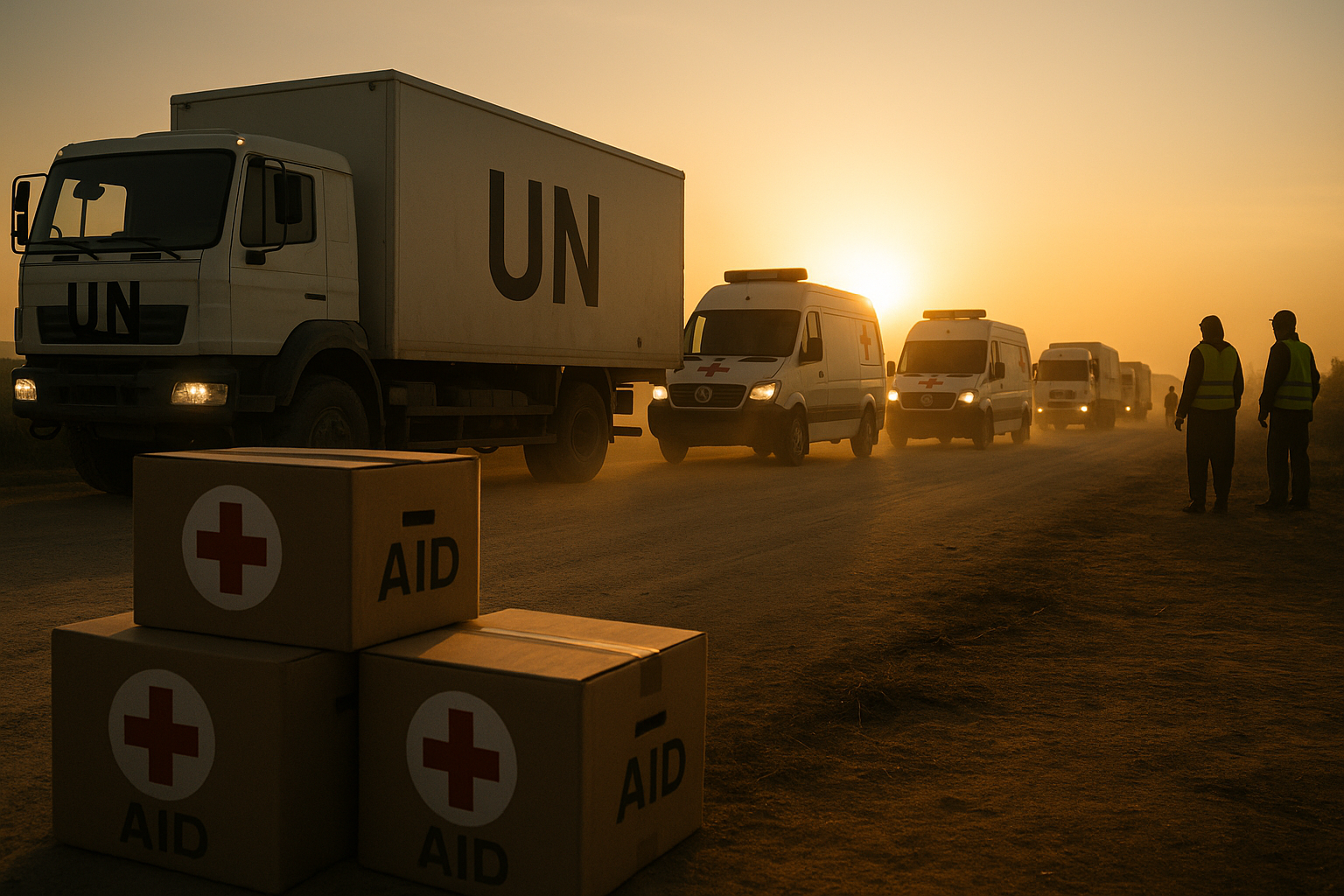
The United Nations Security Council voted on Tuesday to authorise a network of protected humanitarian corridors, adopting a resolution that diplomats described as the most consequential humanitarian measure the body has passed in several years. The text passed with 13 votes in favour and two abstentions, clearing the threshold after a week of intensive negotiation over its scope and enforcement language.
The resolution establishes time-bound corridors for the delivery of food, medicine and fuel into areas cut off by months of fighting, and creates a monitoring mechanism under the Office for the Coordination of Humanitarian Affairs to verify that aid reaches civilians rather than armed groups. It calls on all parties to guarantee safe passage for relief convoys and medical evacuations, and requests the Secretary-General to report back within 30 days on compliance.
The United Arab Emirates, which has pressed for unimpeded humanitarian access in successive Council sessions, welcomed the outcome.
The United Arab Emirates, which has pressed for unimpeded humanitarian access in successive Council sessions, welcomed the outcome. In remarks after the vote, the UAE's representative said the measure "puts the protection of civilians where it belongs — at the centre of this Council's work," and pledged additional relief funding channelled through Emirati aid agencies and their partners on the ground.
Humanitarian organisations gave the resolution a cautious welcome. Aid officials said the corridors could ease access to several besieged districts within days if the parties honour their commitments, but warned that previous ceasefire windows had collapsed within hours. The monitoring mechanism, they argued, would be the real test of whether the text changes conditions on the ground.
The two abstaining members said they supported the humanitarian intent but objected to provisions they viewed as expanding the Council's enforcement reach. Diplomats said the compromise language — which stops short of authorising the use of force to keep the corridors open — was the price of avoiding a veto.
Analysts cautioned that implementation, not adoption, would determine the resolution's legacy. "The Council has spoken with rare unanimity on the principle," one regional security researcher said. "The question now is logistics, access and political will." Relief agencies said the first convoys could move once routes are surveyed and security guarantees confirmed.